
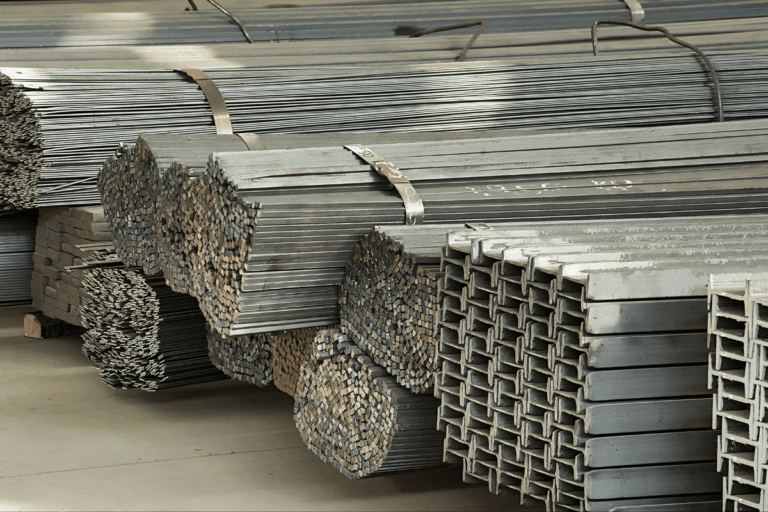
The European Union has published Regulation (EU) 2025/2083, which amends Regulation (EU) 2023/956 and strengthens the Carbon Border Adjustment Mechanism (CBAM). This update is part of the European Commission’s first Omnibus package, published on 26 February 2025, and is a key step towards simplifying its implementation, reducing administrative burdens and ensuring the climate effectiveness of the mechanism.
European regulations governing the CBAM
The Carbon Border Adjustment Mechanism (CBAM) was created by Regulation (EU) 2023/956, adopted in May 2023 as a central part of the European Green Deal. During its initial phase, between 2023 and 2025, companies were only required to report emissions associated with their imports, with no financial obligations attached.
The European Union has now taken a further step with the adoption of Regulation (EU) 2025/2083, which updates and strengthens the functioning of the CBAM. The new regulation simplifies procedures, redefines obligations and adjusts emission calculation methods, with the aim of facilitating its implementation and consolidating its role as a climate tool.
Main changes to the CBAM from 2026 onwards
1. New single threshold of 50 tonnes and de minimis exemption:
One of the most significant changes is the creation of a single threshold based on net imported mass. Companies that import less than 50 tonnes per year of products covered by the CBAM into the European Union will be exempt from its obligations. This limit will apply to sectors such as steel, aluminium, fertilisers and cement, but will not affect imports of hydrogen or electricity.
The aim is to reduce the administrative burden for operators with low volumes, especially SMEs, without compromising the environmental coverage of the mechanism.
The threshold will apply from 1 January 2026.
2. Obligation to be a CBAM authorised declarant:
Only authorised declarants — importers or indirect customs representatives — may bring goods subject to the mechanism into the EU. This authorisation becomes a requirement from 1 January 2026.
Temporary exception: If the authorisation application is submitted before 31 March 2026, the importer may continue to operate provisionally until the competent authority has made a decision.
3. New emissions calculation system:
From 2026 onwards:
- Implicit emissions shall be calculated using default values published by the Commission or using actual values verified by accredited verifiers.
- Verification shall only be mandatory when actual values are used.
4. Annual CBAM declarations:
CBAM declarations must be submitted:
- Before 30 September each year
- For the first time in 2027, with regard to imports in 2026
A specific module will be enabled in the CBAM Registry and delegation to third parties will be permitted.
5. Purchase of CBAM certificates:
- The quarterly obligation to hold CBAM certificates is reduced:
- From 80% to 50% of cumulative embedded emissions since the beginning of the year.
6. Additional regulatory impact:
Regulation (EU) 2025/2083 entails the amendment of:
- Implementing Regulation (EU) 2025/486
- Implementing Regulation (EU) 2024/3210
The Commission expects to complete these adjustments in the coming months.
Impact of CBAM on businesses and importers
The entry into force of the definitive CBAM period in 2026 will entail:
- New formal obligations: need to be an authorised declarant and submit annual declarations.
- CBAM certificate management, albeit with a reduced quarterly burden.
- Lower administrative burden for low-volume importers thanks to the 50-tonne threshold.
- Greater legal certainty in the calculation of emissions using default values.
- Incentives for global decarbonisation, by maintaining consistency with the European Emissions Trading Scheme (ETS).
Support for CBAM compliance
In a constantly evolving regulatory environment, having tools that enable the identification and understanding of legal obligations is essential for effective environmental management.
Ecogestor Legislation, the solution from Eurofins Environment Testing Spain, offers an up-to-date and structured system that facilitates the monitoring of applicable regulations — including CBAM — at European, national and regional level, providing technical rigour and legal certainty to organisations.