The circular economy continues to gain momentum across the European Union, with firm steps that directly impact manufacturers, repair professionals, and consumers. A new EU Directive introduces significant changes in how goods repair information must be communicated, setting clear deadlines and specific obligations that stakeholders should understand well in advance. With key milestones approaching in 2026, staying informed will be essential to avoid non‑compliance.
A European landscape focused on repairability and sustainability
This provision amends Regulation (EU) 2017/2394 and Directives (EU) 2019/771 and (EU) 2020/1828, strengthening the role of consumer information as a key driver for more sustainable purchasing and repair decisions. The transposition deadline is 31 July 2026, giving Member States and economic operators a limited window to adapt.
Information obligations for repairers: clarity and transparency
One of the key pillars of the Directive focuses on the information obligations of repairers, who must provide consumers with the European Repair Information Form. Once the Directive is transposed, they will be requierd to:
- Specify the conditions of repair clearly and comprehensibly.
- Provide the form of free change, o a durable medium and before the contract is formalised.
- Inform the consumer in advance of any diagnostic service fees, when applicable.
- Keep the repair conditions unchanged for a period of 30 calendar days.
These requirements are desgined to build consumer trust and make it easier to compare repair options objectively.
New information requirements for manufacturers and importers
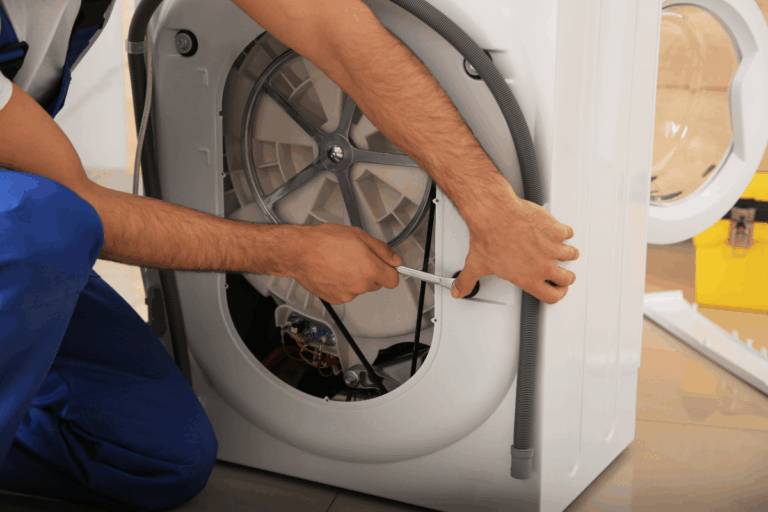
The Directive (EU) 2024/1799 also introduces specific obligations for manufacturers of the goods listed in Annex II—including domestic washing machines, refrigeration appliances, electronic displays, welding equipment, vacuum cleaners, servers and data‑storage products, mobile or cordless phones, among others—as well as for authorised representatives and importers. Key information obligations include:
- Repair goods when EU-established repairability requirements apply, doing so free of charge or at a reasonable cost and within a reasonable timeframe.
- Publish information on indicative prices for common repairs on a freely accessible website.
- Do not use contractual clauses or technical solutions (hardware or software) that prevent repair.
- Do not hinder independent repairers form using original, compatible, second-hand, or 3D-printed spare parts.
- Do not refuse to carry out a repair on the grounds that the product has previously been repaired by someone else.
Likewise, manufacturers placing spate parts and tools on the market must offer them at a reasonable price—one that does not discourage repair.
Consumer information after repair and extended liability
For goods sold after 31 July 2026, the repair Directive introduces an additional information requirement:
- When a repair is carried out to restore the product’s conformity, the manufacturer must extend the liability period by 12 months. This extention may be applied only once.
- Consumers must be informed of their right to choose between repair or replacement, as well as for the possible extension of the liability period.
This reinforces consumer protection and firmly positions repair as the preferred option over replacement.
Staying up to date with environmental and product regulations
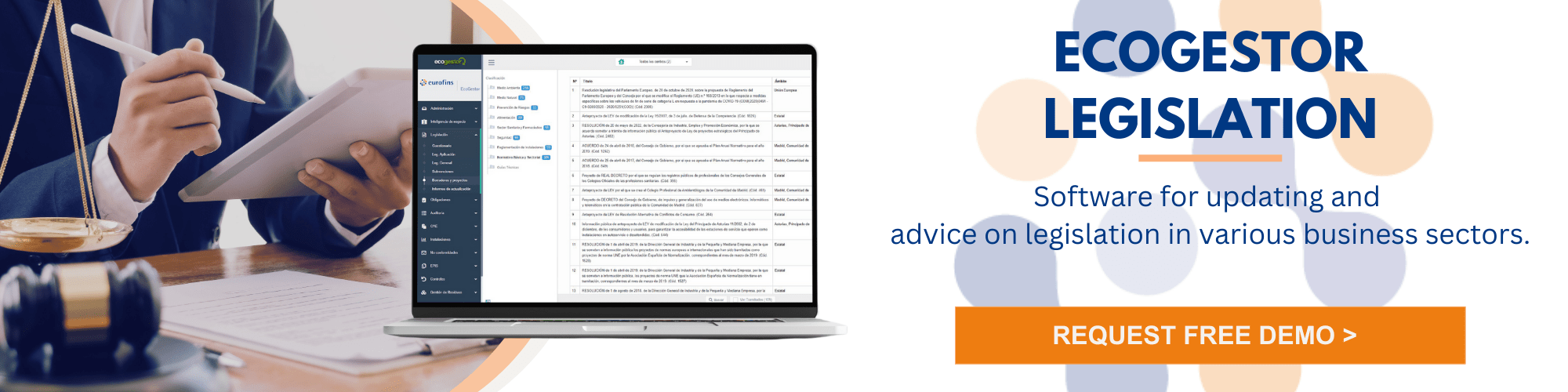
Given the growing complexity and volume of new regulatory obligations, having tools that simplify legislative monitoring has become essential. Solutions such as EcoGestor Legislation form Eurofins Environment Testing Spain enable organizations to stay up to date on relevant regulatory changes,a ssess their applicability, and anticipate compliance actions in a structured and efficient way.
The role of Eurofins in regulatory guidance
From the Regulatory Consulting and Compliance unit at Eurofins Environment Testing Spain, we support companies and organisations in interpreting, monitoring and adapting to Eruropean and national regulations, helping them integrate these new information obligations into their management systems and legal compliance frameworks.
Discover how to stay up to date with de EU regulations on the repair of goods with EcoGestor Legislation from Eurofins Environment Testing Spain.