
Legislación

greenwashing directive

New Directive (EU) 2024/825 and the approach against greenwashing: what is it and what implications will it have for businesses?

New Directive (EU) 2024/825 and the approach against greenwashing: what is it and what implications will it have for businesses? 1200 800 Eurofins EcoGestor

Directive (EU) 2024/825 of the European Parliament and of the Council of 28 February 2024 has been adopted with an ambitious and strategic objective: to empower consumers for the green transition through better protection against unfair commercial practices and clearer and more reliable information on the environmental and social characteristics of goods and services.

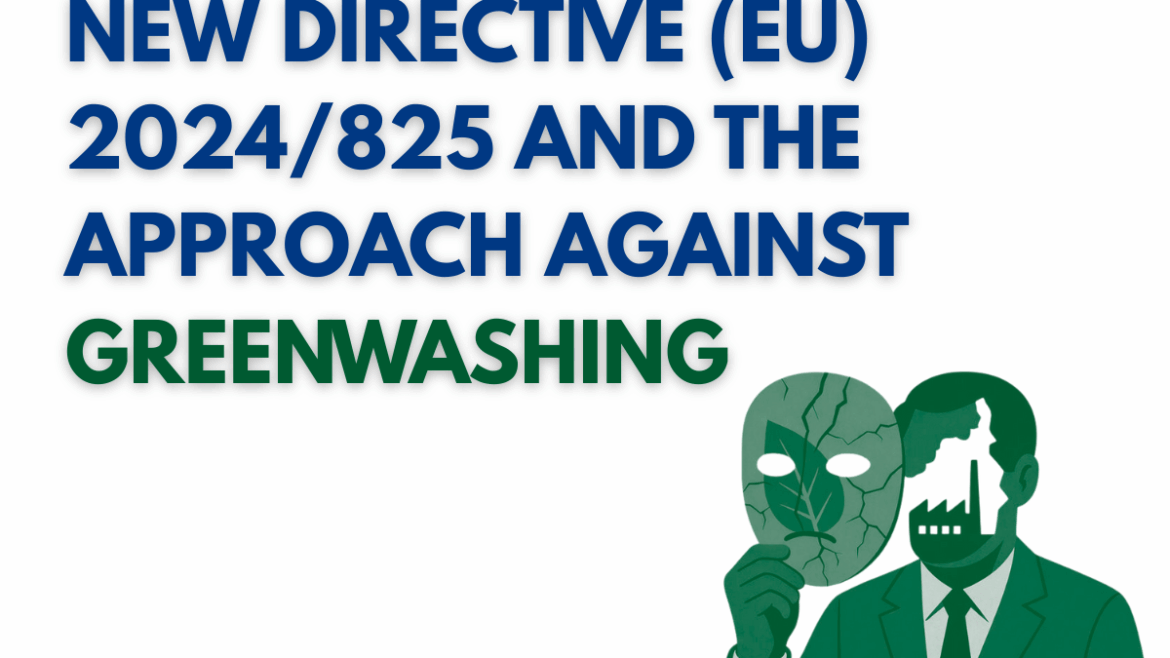
This new European framework essentially strengthens the fight against so-called greenwashing — marketing practices in which companies provide ambiguous, exaggerated or false information about environmental benefits to attract customers — and extends the obligations of transparency and truthfulness in commercial communications.

What does the Directive consist of?

The Directive mainly amends two key pieces of EU law:

  • Directive 2005/29/EC on unfair commercial practices and
  • Directive 2011/83/EU on consumer rights.

Its approach is twofold:

  1. Protection against misleading practices that make it difficult for consumers to make environmentally responsible purchasing decisions, such as:
    • Misleading environmental or social claims about products (e.g., ‘eco-friendly’ without objective backing).
    • Unclear or difficult to verify information on characteristics such as repairability, durability or recyclability.
    • Ambiguous comparisons between products that may be misleading.
  2. Improvement of the pre-contractual information that companies must provide before purchase, especially in relation to:
    • the availability of more sustainable delivery options,
    • information on repair and after-sales services,
    • details of durability guarantees or the conditions for software updates on digital goods.

Together, these measures aim to enable consumers to compare and choose products in a more informed and sustainable manner, and to enable companies to compete on the basis of facts — not ambiguous claims — about sustainability.

What is greenwashing and how does this Directive combat it?

Greenwashing refers to marketing practices in which a company presents its products or services as more environmentally friendly than they actually are or uses vague terms without verifiable support. The Directive acts on two fronts here:

  • Extends the practices considered unfair when they mislead consumers about environmental benefits.
  • It requires that environmental claims be backed by clear, objective, publicly verifiable commitments accompanied by implementation plans with allocated resources.

This implies that a company cannot simply claim that a product is “environmentally friendly” or “neutral” without providing verifiable and accessible evidence of how that conclusion was reached.

Key deadlines for companies in the EU

  • Transposition deadline:

Member States must transpose the content of the Directive into their national legislation by 27 March 2026.

In Spain, this process has already begun with the drafting of the Preliminary Bill on Sustainable Consumption, which will serve as a regulatory instrument to adapt Spanish law to new European requirements on environmental information, combating greenwashing and protecting consumers.

  • Effective application:

The rules may be applied from 27 September 2026, the date on which penalties or contract exclusions may be imposed for failure to comply with the obligations arising from the Directive.

This timetable is key for companies to prepare in advance and adapt their communication, labelling and environmental information management processes. ental.  

What obligations will companies have?

Companies operating in the EU market must:

  • Ensure that all environmental or social statements are clear, verifiable and reliable.
  • Avoid ambiguous or unsubstantiated claims that could mislead consumers (greenwashing).
  • Provide detailed and accessible information on relevant characteristics of the product or service — including aspects of circularity and sustainability — prior to purchase.
  • Facilitate objective comparisons between products when environmental data is included.
  • Include information on repair, durability, availability of parts and after-sales services, where applicable.

Furthermore, traders may be required to verify certain claims through independent third-party experts, especially when referring to specific sustainability objectives or targets.

Conclusion

Directive (EU) 2024/825 represents an important step by the European Union to combat greenwashing and strengthen consumer rights in their transition towards more sustainable consumption patterns.

For companies, this implies increased obligations in terms of transparency, verification and reporting of environmental and social information, with a direct impact on communication, marketing and regulatory compliance strategies.

Is your company ready to comply with Directive (EU) 2024/825 and avoid penalties for greenwashing? Contact us for expert advice.

Plan laboratory maintenance

How to plan maintenance in laboratories to ensure accuracy and efficiency?

How to plan maintenance in laboratories to ensure accuracy and efficiency? 1200 800 Eurofins EcoGestor

In a laboratory, even the smallest failure can compromise key results. That’s why more and more organizations are seeking tools to ensure the proper functioning of their equipment. The key? Proper maintenance planning. Keep reading to find out how to achieve it.

The challenge of keeping laboratory equipment in optimal condition

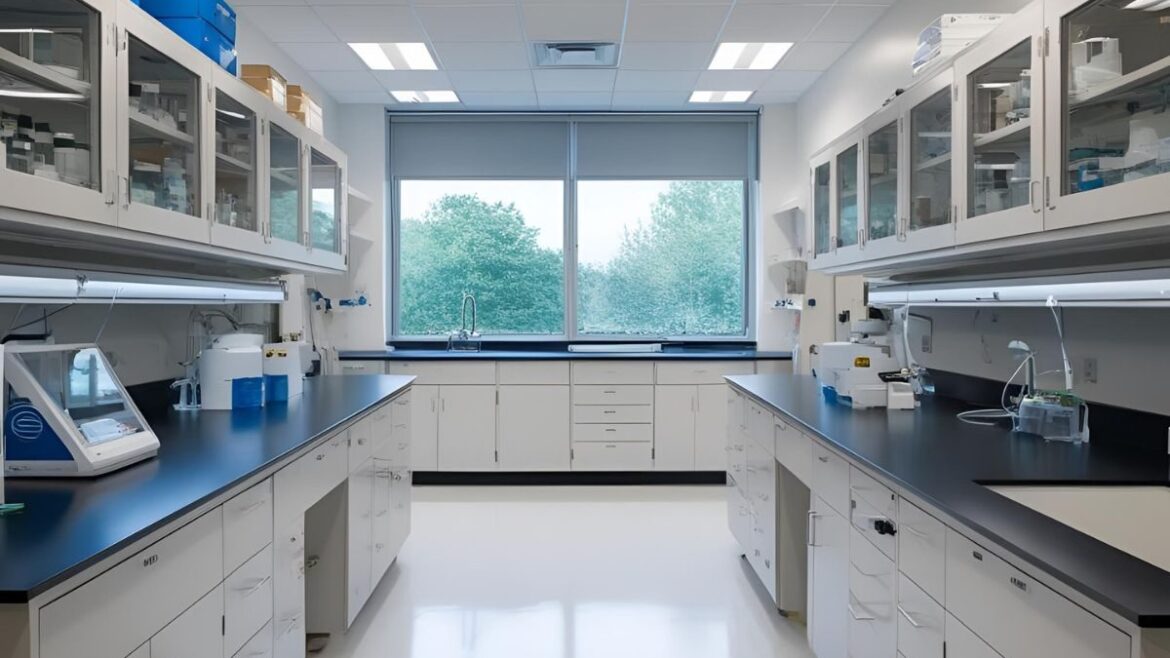
Centrifuges failing in the middle of a critical sample, scales with imperceptible misalignments, or ovens with inconsistent temperatures. These situations not only slow down work but also compromise the quality of analytical results. In this context, planning laboratory maintenance becomes both an operational and strategic necessity.

The solution lies in incorporating tools that provide full control over assets, such as EcoGestor CMMS, a specialized maintenance software that facilitates both preventive and corrective maintenance, allowing technical teams to focus on their true priority: quality.

EcoGestor CMMS: Total Planning and Control in Laboratories

EcoGestor CMMS has become the ideal solution for managing laboratory equipment. Thanks to its features specifically designed for this environment, it enables:

  • Plan and schedule maintenance tasks efficiently and custom-made, avoiding delays and human errors.
  • Monitor calibration dates for equipment such as balances, ovens, climate chambers, or centrifuges.
  • Verify equipment availability, optimizing usage and avoiding unexpected downtime.
  • Manage corrective maintenance, acting quickly in response to issues and minimizing downtime.
  • Visualize the real-time status of equipment, with key indicators that enable better decision-making.
  • Identify each piece of equipment with QR code labels, simplifying access to its technical sheet, pending tasks, or maintenance history. Managing maintenance, both preventive and corrective, has never been easier

In addition, EcoGestor GMAO has already been successfully implemented in large reference laboratories, demonstrating its ability to adapt to demanding environments. We have extensive experience in the sector, and our specialized technicians support the entire maintenance digitalization process, from the initial diagnosis to implementation and training, ensuring a smooth, guided, and fully tailored deployment for each specific situation.

Direct benefits of good maintenance planning

Implementing a maintenance plan with EcoGestor GMAO brings numerous benefits:

  • Work time optimization: equipment is available and calibrated right when it is needed
  • Reduction of operational costs: by detecting failures before they become serious, expensive repairs are avoided.
  • Regulatory compliance: ensures the recording and tracking of tasks required by quality and safety regulations.
  • Data-driven decision making: updated and accessible information to plan resources in advance.

Additionally, the system adapts to the reality of each laboratory, regardless of its size, equipment volume, or operational complexity.

What type of equipment does EcoGestor GMAO work with?

Balances, centrifuges, ovens, incubators, climate chambers, and any other equipment that requires calibration, periodic review, or specialized technical maintenance. The system’s flexibility allows for the inclusion of all valuable laboratory assets, integrating tasks, alerts, intervention histories, and more.

¿Quieres implementar un plan de mantenimiento eficaz en tu laboratorio?

Discover how EcoGestor GMAO can help you plan and manage maintenance in a centralized, organized way, aligned with the real needs of your activity. Because an efficient laboratory not only analyzes well: it also plans better.

Request a free demo of EcoGestor GMAO and discover how our experts can help you digitally manage your laboratory maintenance in an agile and effective way.